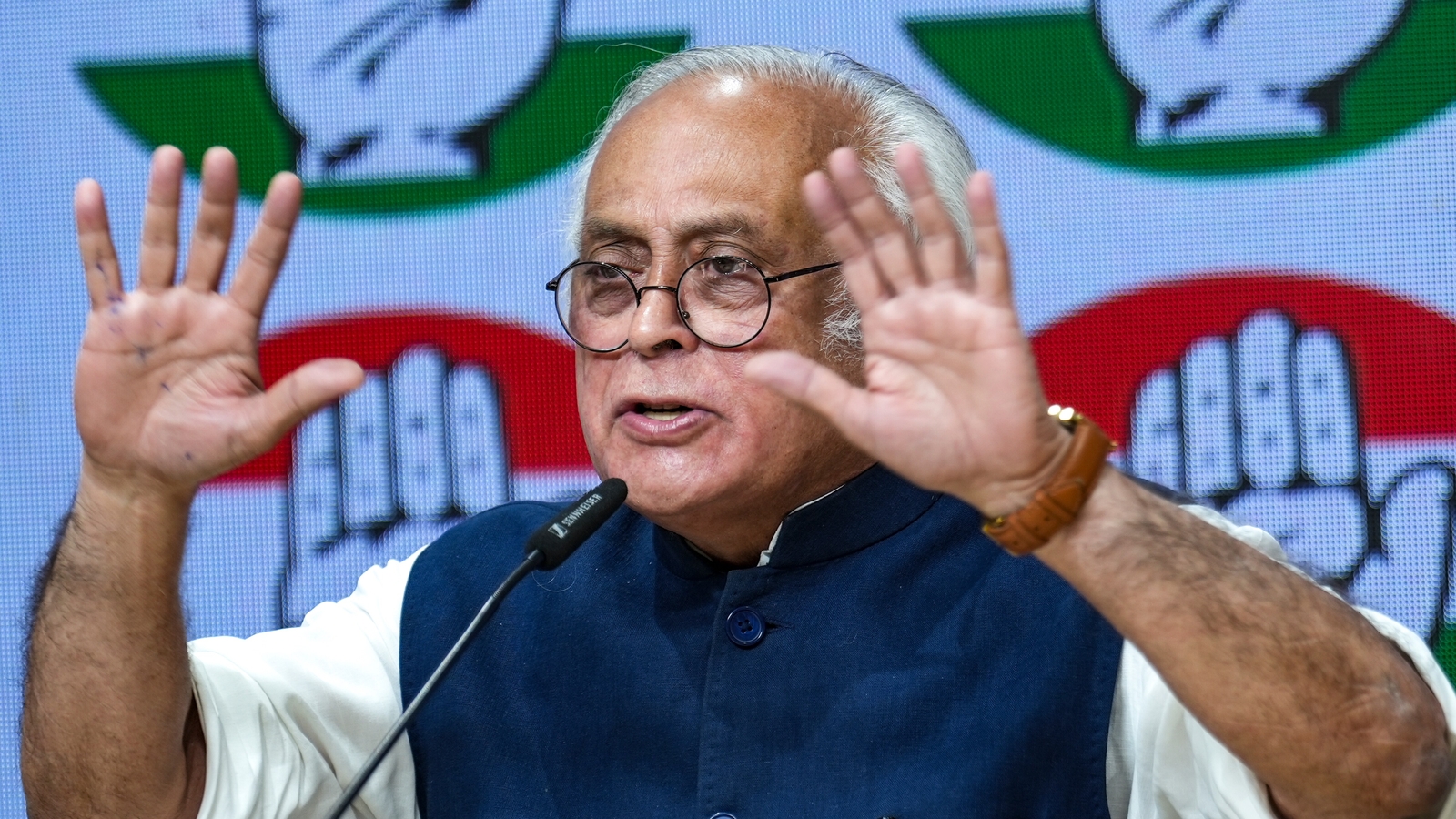
The Congress on Friday said it was willing to discuss with the government a fresh delimitation bill that would delink the redrawing of constituencies from the 2027 Census, signalling a change in its stance on the controversial legislation that could not garner the required support earlier this year. The development comes amid continued uncertainty over the winter session of Parliament, which began on December 1 last year, and speculation that the government was still interested in calling a special session to push through bills implementing delimitation and women's reservation. According to Congress functionaries, the government might offer a constitutional guarantee of a 50% increase in the seats of all states.
Party general secretary Jairam Ramesh said the Congress was not against the delimitation exercise as such but wanted the matter resolved through dialogue and discussion with all political parties to ensure no state was placed at a disadvantage. He said that once Census results are out early next year, Article 82 of the Constitution will come into force and delimitation would be held, which could be unfavourable to some southern states and is thus not feasible. The party reiterated its four original demands: Lok Sabha seats must remain at 543, the women's quota should be carved out of 543, state-wise quota should be retained and frozen for 25 years, and an all-party meeting and talks with the government should be held. Ramesh added that the government was yet to disclose any proposals for the delimitation bill.
Ramesh also said all parties of the INDIA bloc, including the NCP (SP) and the DMK, were on the same page on the four points, and that the DMK was party to a Tamil Nadu assembly resolution stating there should be no change in the number of Lok Sabha seats and that Tamil Nadu should not be put at a disadvantage due to delimitation. A senior NDA leader said there was no question of the government negotiating on the provision for a 50% increase in seats, that it had already reached out to all parties with the assurance that no state would lose any seats, and that the bill proposes to maintain the proportional representation of states.
In April this year, the constitution amendment bill to increase the maximum number of Lok Sabha seats from 550 to 850 and link the women's quota with the last published census failed to garner the required two-thirds majority, receiving 298 votes in favour and 230 against. Since then, 20 out of 28 Trinamool Congress lawmakers have said they will support the National Democratic Alliance and six of nine Shiv Sena (UBT) MPs have joined the Shiv Sena, but the Opposition still has more than the 181 votes required to deny the bill passage. A delimitation based on the 2027 Census, as mandated under Article 82, effectively means southern states and a few other states such as Punjab face the possibility of losing a proportion of seats, while more populous states including Uttar Pradesh, Bihar and Maharashtra might get a higher quota of constituencies. This provision was put in abeyance till 2026, first by the Indira Gandhi government in 1976 and then by the Atal Bihari Vajpayee government in 2001. The Constitution (One Hundred and Thirty First Amendment) Bill, 2026, or the Delimitation Bill, which seeks to redraw boundaries based on the 2011 Census and is a prerequisite for implementing the 33% quota for women in legislatures, requires a two-thirds majority for passage, which the NDA does not currently have in either House.